

2026 workplace mental health trends: what CHROs are seeing before the rest of us

Content
- Transformation is the new normal
- Burnout is a business risk
- AI is accelerating – but humanity is everything
- Authentic leadership is the differentiator
- The real shift heading into 2026
Most companies are now in a state of constant and overlapping transformation.
In this special edition of Lead From Within, Dr. Nick Taylor brings together insights from six CHROs across global organizations to unpack what’s shaping workplace mental health in 2026.
Tune in if any or all of these sound familiar: constant change, AI integration, burnout risk, and the rising value of authentic human leadership are the forces
Transformation is the new normal
There was a time when transformation was a defined initiative. A program with a start and end date. That time is over.
Leaders today are navigating overlapping forces: AI disruption, economic pressure, hybrid work, and geopolitical instability – to name a few. At times the pace can feel relentless.
As Tracy Layney, CHRO at Levi Strauss & Co., reflected:
“If you look back at the pace of change over the last 30 years, it’s continually increased over time… and now this massively transformative technology is going to hit everybody in different ways.”
Employees aren’t adjusting to one shift. They’re adjusting to many, at once.
“Success starts with people.”

Strategy without people support doesn’t hold. Technology without workforce readiness doesn’t scale. The CHROs in this conversation are clear: transformation succeeds or fails at the human level.
Burnout is a business risk
One of the most powerful moments in the episode was personal.
Tracy spoke openly about hitting burnout during her career. Not feeling stretched – depleted.
“When you really hit that wall of burnout… every second of every day is deeply painful because there’s no reserve left.”
That testimony helped reframe conversation. The answer isn’t about putting the onus on individuals to build resilience, it’s about taking a whole-organization approach and fostering sustainable performance.
Brendan Reidy, CHRO at Acushnet, spoke about losing his younger brother after a lifelong battle with depression, and why workplaces must treat mental health as seriously as physical health.
“We as companies need to talk about these situations and treat them as if it’s just like a broken arm.”
In 2026, mental health isn’t a side initiative. It’s infrastructure. The organizations that treat it that way will outperform.
AI is accelerating – but humanity is everything
Every CHRO acknowledged the same reality: AI is moving from experimentation to everyday application.
Recruiting, workflow automation, decision support and role redesign all look different today.
And it’s our responsibility as leaders to upskill our people.
Kristy Banas said:
“AI won’t replace humans, but humans who use AI will certainly surpass those who don’t.”
Daniela Seabrook, CHRO at Adecco, shared how AI pilots are freeing recruiters to focus more on human connection instead of repetitive tasks.
But there’s caution too. AI in workplace mental health must meet ethical and clinical standards. Speed cannot come at the expense of safety.
The opportunity is real. So is the responsibility.
Authentic leadership is the differentiator
As transactional work becomes automated, human leadership becomes more visible. Now empathy, psychological safety, and authenticity are at a premium.
Daniela spoke about co-creating leadership principles around vulnerability with Adecco’s top leaders.
Tania Gandamihardja, CHRO at BAE Systems, reflected on what authentic leadership looks like in practice.
“You can be yourself and still be effective and an impactful leader.”
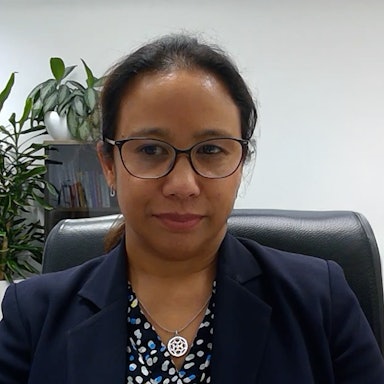
And Michael Weening, President and CEO at Calix, reinforced that people strategy cannot sit apart from business strategy.
“The function will always operate at this intersection of business strategy, financial strategy, and people strategy.”
In high-change environments, employees don’t need invincible leaders. They need grounded ones.
The real shift heading into 2026
If there’s one through-line across this conversation, it’s integration.
Performance and wellbeing.
Technology and humanity.
Change and stability.
They’re often pitted as trade-offs, but they need to be seen as partnerships.
The leaders who thrive in 2026 will be the ones who can hold multiple truths at once, embracing AI while deepening empathy, driving performance while protecting wellbeing, accelerating transformation while supporting the people delivering it.
The future of work isn’t less human.
As long as leaders design it that way.
Listen to the full special edition of Lead From Within to hear the complete conversation and what these CHROs are prioritizing as we head into 2026.