

Leading with humanity: Brendan Reidy on people-first leadership

Raya Moshiri
08 January 2026

Content
- Learning early what teams really require
- Choosing the work, not just the title
- Stepping into stewardship at Acushnet
- Holding high standards without losing the human connection
- When leadership becomes personal
- What stays with you
“People want to be led by people who treat them in a good way.”
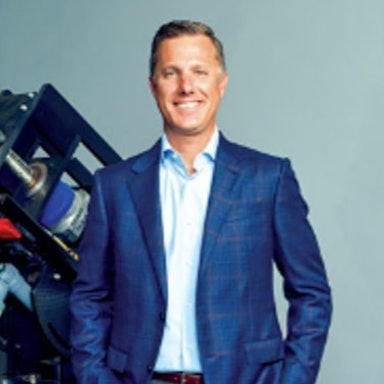
Brendan Reidy doesn’t overcomplicate good leadership. He understands the responsibility behind it.
As Chief People Officer at Acushnet, Brendan carries responsibility for more than 7,000 people across multiple brands, regions, and cultures. It’s a role that demands strategic clarity, commercial judgment, and constant adaptability. But underneath all of that sits a much simpler conviction – leadership works best when it’s grounded in humanity.
That belief didn’t arrive fully formed. It was shaped over time, long before big titles or global responsibility entered the picture.
Learning early what teams really require
Brendan grew up in southern Connecticut in a household where learning mattered. Both of his parents were high school English teachers, and effort was expected. Outside of school, sport filled much of his world – basketball, baseball, cross-country. He was competitive and driven, but what stayed with him most wasn’t winning. It was belonging.
Teams only work when people show up for one another. That lesson stuck.
He also learned something else early on – success didn’t come effortlessly. He wasn’t the person who could coast.
“I always believed that through preparation and through hard work, that would enable me to be successful.”
That belief became a throughline. If something mattered, he prepared. If something was difficult, he worked at it. Over time, that mindset shifted from proving himself to earning responsibility.
Choosing the work, not just the title
Brendan didn’t enter HR with a master plan. His first role out of college was in recruiting, placing HR professionals into organizations. Without realizing it at the time, he was learning how differently companies treated their people.
Some HR teams were deeply embedded in the business. Others were reactive and procedural. The contrast mattered. It clarified not just the function he wanted to work in, but the kind of leader he wanted to become.
From there, his career unfolded deliberately – Gillette, Procter & Gamble, nearly a decade rotating through roles, businesses, and geographies in an organization known for building leaders from within. An expat assignment in Costa Rica stretched him further, professionally and personally.
It was exciting. It was meaningful. It was also hard.
New culture, new language, a young family. Distance from friends and support systems. Brendan is open about the pressure of that period and about a truth many leaders recognize – leadership doesn’t insulate you from stress. It amplifies it.
What helped was learning to create space outside work – physical activity, routines, and outlets that kept pressure from turning into burnout.
Stepping into stewardship at Acushnet
By the time Brendan joined Acushnet, his ambition was clear – step fully into the Chief People Officer role and take accountability for the people agenda at scale.
What drew him wasn’t just the prestige of brands like Titleist and FootJoy. It was the culture, the lengthy average tenure, the pride people felt in their work. The fact that many employees chose to stay year after year, building careers rather than passing through.
Brendan didn’t arrive with a mandate to overhaul that culture. His question was simpler, and harder – how do you protect what’s strong while guiding it forward?
“We try to play the long game.”
That philosophy runs deep at Acushnet. Leaders are hired with the future in mind. Development is intentional, not rushed. New leaders aren’t pressured to make immediate changes just to signal action. They’re encouraged to learn first – to really understand the business, the brands, and the people – before evolving what already works.
Internal succession matters. Tenure matters. Trust is built slowly and deliberately.
Holding high standards without losing the human connection
One of the most honest moments in the conversation comes when Brendan names the tension at the heart of leadership. Performance matters, standards matter. Acushnet expects excellence.
The challenge is holding those standards without losing the human connection.
“How do we keep the performance standards up to where they need to be… but do it in a way that brings that human connection in?”
At Acushnet, that question is answered by taking the whole person seriously. Work isn’t treated as separate from life. Health, mental health, stress, and personal circumstances are acknowledged as part of performance, not distractions from it.
The belief is straightforward – people do their best work when they’re supported as people.
That belief shows up in long-standing health and wellness investments, in how leaders talk about their teams, and in how the organization responds when someone is struggling. Support isn’t performative. It’s built into the system.
When leadership becomes personal
Toward the end of the conversation, Brendan shared something deeply personal. About 18 months earlier, his younger brother passed away after a lifelong battle with depression and debilitating anxiety.
He didn’t share the story for effect. He shared it because it explains why this work matters.
For too long, mental health has carried stigma – spoken about quietly, if at all. Brendan believes it should be treated no differently than physical health: named openly, supported early, and met without judgment.
Silence, he knows, can be devastating.
His hope is simple but urgent – that talking about mental health becomes normal, because when people are surrounded by support and able to speak openly, outcomes improve.
What stays with you
After listening to Brendan Reidy, what lingers isn’t a framework or a trend. It’s a tone. A sense of steadiness. A belief that leadership is less about control and more about care.
In a world obsessed with speed and optimization, he’s playing a different game – one built on patience, adaptability, and humanity.
And that may be exactly why it works.
Listen to the full episode of Lead From Within to hear the entire conversation and explore what it really means to lead people well when the stakes are high and the world keeps changing.
About the Author

Raya Moshiri, Marketing Associate
I’m Raya Moshiri, and I help organizations bring proactive mental health support to life by coordinating programs, resources, and experiences that drive engagement and real-world impact. Based in New York, I’m dedicated to making workplace wellbeing both attainable and actionable.
About the Author
Raya Moshiri, Marketing Associate
I’m Raya Moshiri, and I help organizations bring proactive mental health support to life by coordinating programs, resources, and experiences that drive engagement and real-world impact. Based in New York, I’m dedicated to making workplace wellbeing both attainable and actionable.