

How a global consumer goods firm validated AI-powered wellbeing support: A randomized controlled trial
Content
- The challenge
- The solution
- The impact
- Demographic and adoption insights
- Conclusion
What happens when you deploy AI to tackle workplace mental health – and measure whether it works?
In a 3-month randomized controlled trial (RCT) led by Dr Katie White, Senior Research Scientist, Unmind evaluated the real-world impact of Nova – our purpose-built AI wellbeing coach – among desk workers within a global consumer goods organization operating at scale.
The results were clear: managers using Nova became significantly more confident in managing their own wellbeing and supporting their teams, unlocking one of the most powerful – and often overlooked – drivers of productivity and psychological safety.
This study provides rare, gold-standard evidence that AI can deliver measurable leadership capability at scale, with compounding impact on wellbeing and performance.
Read on to find out more about the challenge, the solution, and the impact.
Industry: Fast moving consumer goods (FMCG)
Size: Operates in 190 countries, employing around 150,000 people
Geo reach: Global presence across multiple continents, including Europe, Asia, Africa, the Americas, and Oceania
The challenge
Before implementing Nova, Unmind conducted a dedicated baseline analysis of the organization’s workforce – combining wellbeing data with AI readiness insights. This diagnostic work revealed a clear, evidence-led case for targeted AI support.
Despite being highly AI-ready – 64% of employees already used general workplace AI tools – the consumer goods giant identified three critical gaps:
- Manager confidence deficit: Managers showed only moderate confidence in discussing mental health and supporting their teams' wellbeing.
- Elevated stress: Employees reported above-average stress levels and below-average emotional support – defined as access to supportive listening, reassurance, care, and understanding.
- Unmet need for safe AI: While general AI tools (ChatGPT, Copilot) offered some stress-buffering benefits, they lack the clinical governance necessary for safe mental health support.
Through these challenges, the question became clear: Could a purpose-built AI wellbeing coach address these gaps in ways generic AI cannot?
The solution
The company partnered with Unmind to conduct a gold-standard randomized controlled trial (RCT) of Nova, Unmind's AI wellbeing coach.
Study design: 171 employees were randomly assigned to either receive immediate access to Nova or join a waitlist control group. Both groups completed validated assessments at baseline, 1 month, and 3 months, measuring emotional support, stress, wellbeing, self-efficacy, manager confidence, and productivity.
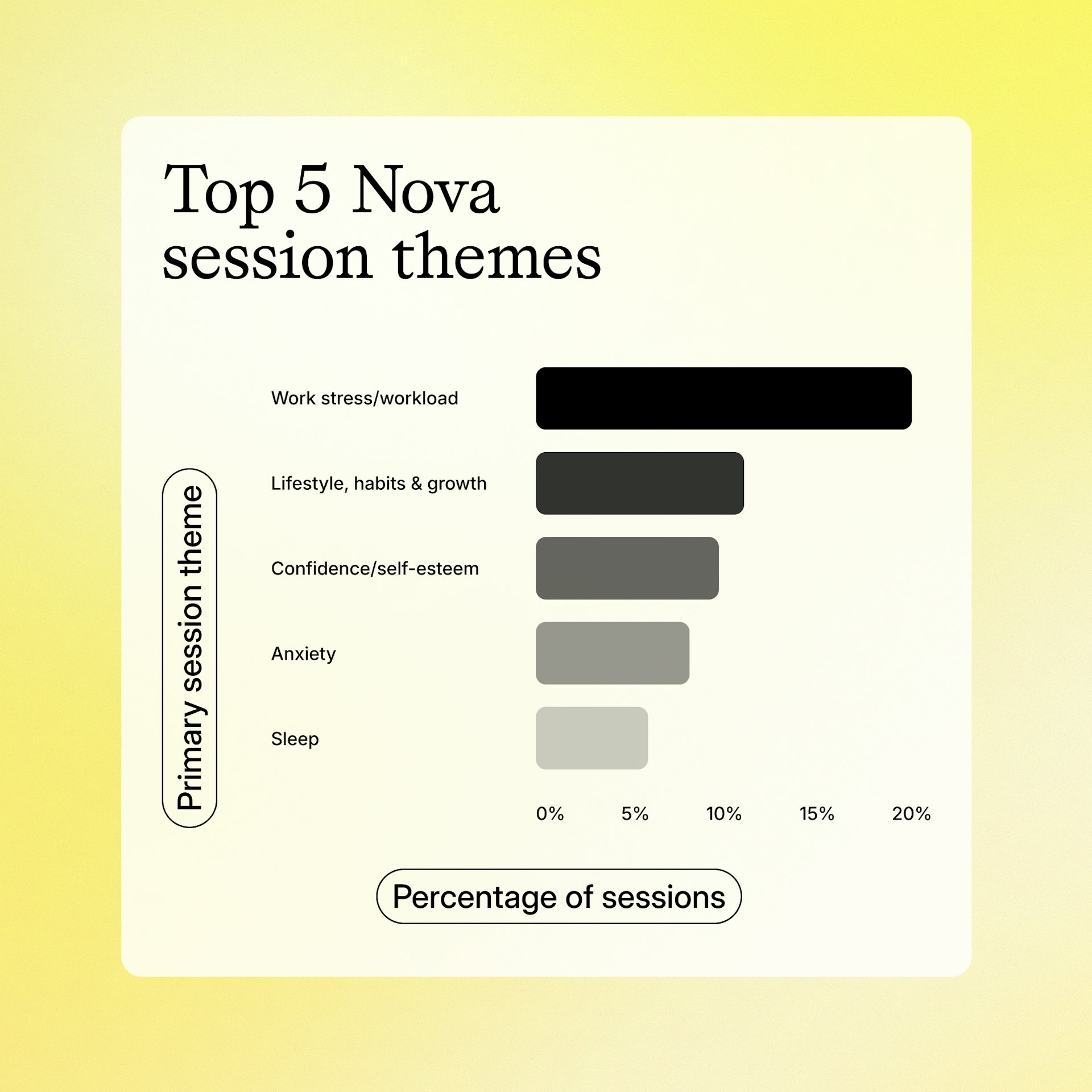
How Nova was used: Employees engaged with Nova 24/7 for personalized, conversational support on workplace challenges. Usage data showed employees tackled high-priority issues:
- Work Stress/Workload (19.8%)
- Confidence/Self-Esteem (13.2%)
- And building healthy habits (14.2%)
The impact
The RCT delivered compelling evidence of Nova's effectiveness:
Manager confidence: A statistically significant breakthrough
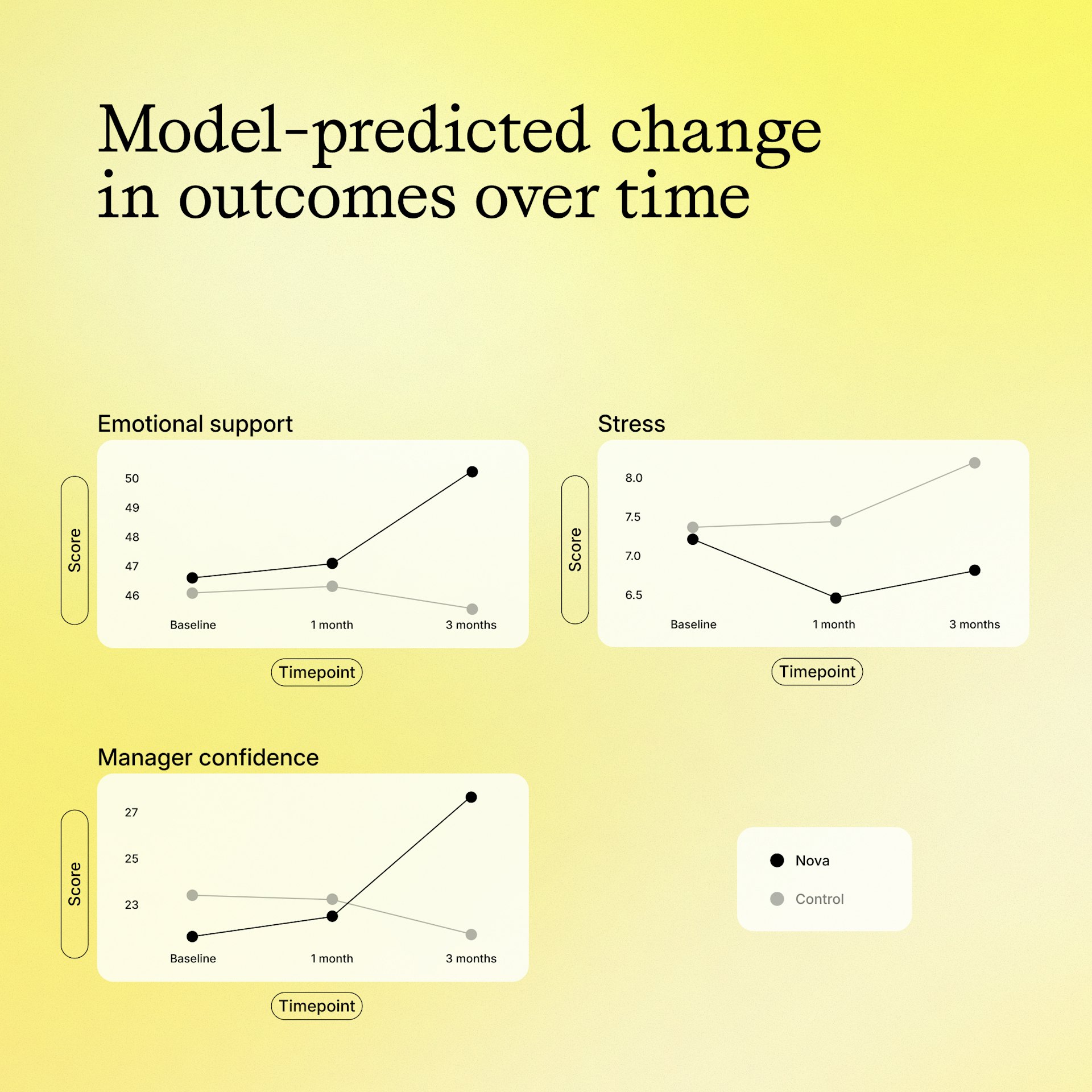
- 30.7% increase in managers' confidence to understand their own wellbeing and support direct reports
- Medium effect size (Cohen's d = 0.51) with statistical significance (p = .031) compared with control group at 3 months
- Strategic impact: Manager confidence is a proven driver of psychological safety and team productivity – this directly addresses a capability gap identified at baseline
Positive wellbeing trends
The intervention group also showed consistent positive trends after 3 months:
- Higher perceived emotional support (4.18-point increase, d = 0.28) than control group
- Lower stress levels (1.35-point reduction, d = 0.26) than control group
These small-to-medium effects provide a strong foundation for validation in larger-scale studies.
Strong user approval
- 80% positive experience rating
- 80% content approval rating
Nova is organically filling a gap that generic AI cannot safely bridge – providing confidential, clinically-governed support exactly when and where employees need it.
Demographic and adoption insights
The study revealed valuable adoption insights for large, global organisations:
Generational championing: Younger employees (~34 years) showed significantly higher adoption, positioning them to champion broader usage across the organization.
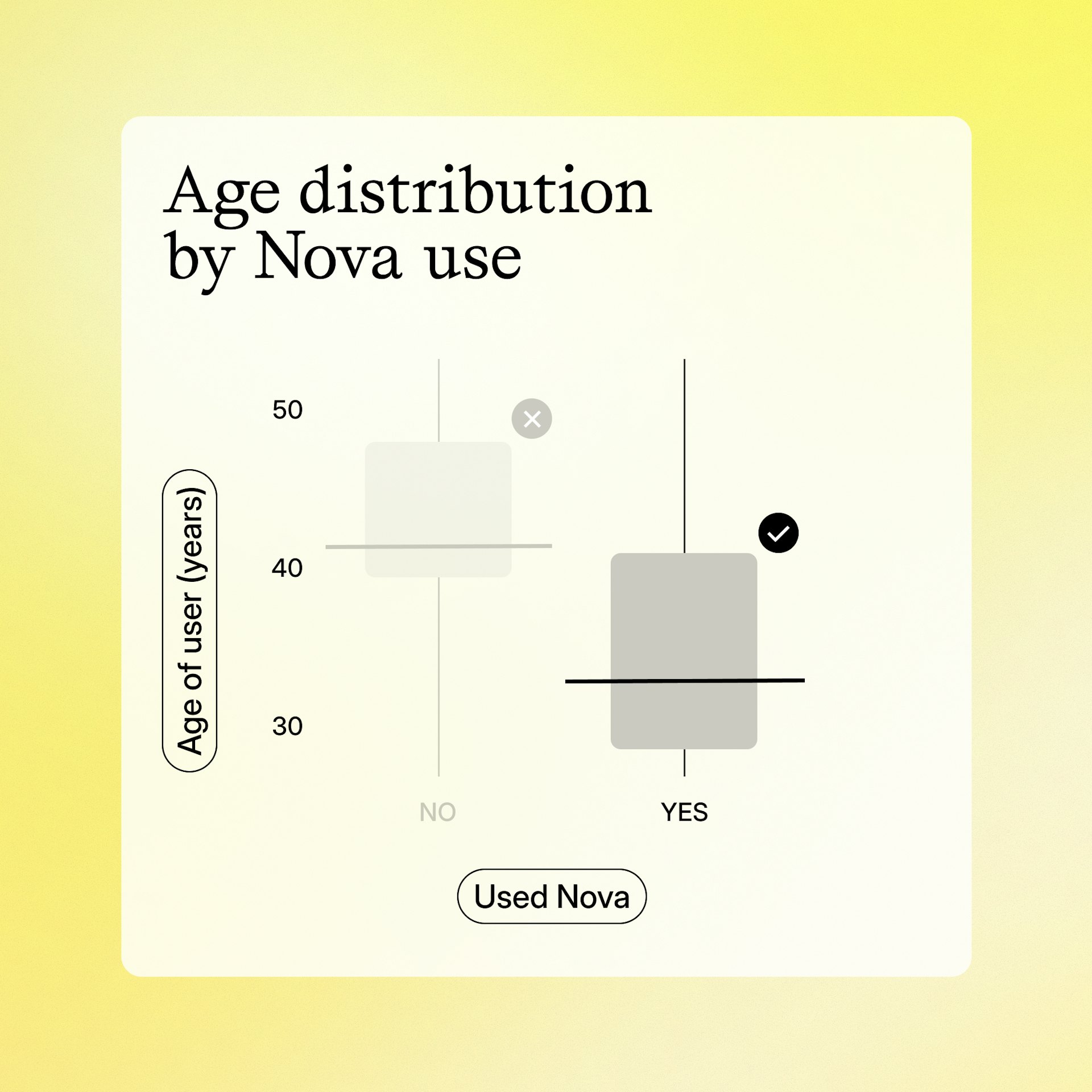
Low barrier to entry: Prior use of general AI tools did not predict Nova adoption, confirming the platform is accessible regardless of technical familiarity.
Implication: Refine communications to improve perceived relevance for older employees while leveraging younger cohorts as internal advocates.
"When organizations invest in proven, purpose-built solutions for mental health, they don't just support their people – they build organizational capability that drives productivity, safety, and performance."

“We want to lead the world – to be among the first to show that this technology genuinely works in real workplace environments.”
Conclusion
This RCT represents a milestone in evidence-based AI deployment for workplace wellbeing – especially in a space where gold-standard randomized controlled studies are still rare.
Running an individual-level RCT in a large, operationally complex organization is logistically hard: recruiting employees, managing control and intervention groups, and maintaining engagement over time while the business carries on as normal. Successfully delivering this study demonstrates that rigorous, real-world evaluation of AI wellbeing tools is both possible and essential.
By demonstrating a significant, meaningful impact on manager confidence – a critical organizational lever – Nova proved it can deliver value where it matters most.
For CHROs navigating the AI era, the takeaway is clear: AI can work for mental health – when it's built for it. Rigorous evidence, clinical governance, and strategic deployment turn promise into performance.
Explore more case studies
Check out our case studies library for more investigations into how Unmind is transforming workplaces across industries and driving measurable impact.